 Made in Humane Club



This post is not about a concept. It’s about a decision I made midway through the series and why I think it matters beyond this project.
When calculators arrived in classrooms, teachers panicked.
Students would stop learning arithmetic. They would become dependent on a machine. They would never develop number sense. The tool would do the thinking and the children would atrophy.
Some of that fear was reasonable. Some of it was wrong. What actually happened was more nuanced: the students who used calculators as a shortcut to avoid thinking got worse. The students who used calculators to go deeper — to check their reasoning, to move faster through computation toward harder problems — got better. The tool didn’t determine the outcome. How it was used did.
We are having the same conversation about AI right now, with higher stakes and more noise. And I am sitting in the middle of it, watching my nine-year-old build games with ChatGPT, trying to figure out where the line is.
This post is where I draw it.
The future is not optional
Let me be direct about one thing first: I am not ambivalent about AI. I run a data visualisation company. I have watched what happens to industries that treat new technology as a threat rather than a tool. I have also watched what happens to people who adopt tools without understanding what they are actually doing.
AI is not going away. The ability to turn a clear brief into working software is already nearly free. In ten years it will be even cheaper and even more capable. A child who grows up never learning to work with AI will be at a disadvantage, the same way a child who never learned to use a calculator or a search engine would be at a disadvantage today.
That is not a controversial position. Most parents reading this series already believe it.
What is less discussed is the specific way AI can make things worse — not by replacing thinking, but by making shallow thinking feel like deep thinking. That is what I watched happen during conditions game. And it is why I introduced a constraint that felt, to my daughter, like going backwards.
The problem with magic
AI can look like magic to a child who doesn’t understand what is happening underneath it.
You type something. Something impressive appears. You didn’t write code. You didn’t design the visuals. You didn’t animate the witch flying across the screen or make the confetti fall realistically from the top of the browser. The AI did all of that and it did it in response to something you typed.
The danger is not that a child thinks they built something they didn’t build. Sabi knew, at some level, that ChatGPT was doing the implementation. We had talked about this from day one — she was the designer, the AI was the implementer, the thinking was hers.
The danger is subtler than that. It is that the impressive output starts arriving faster than the thinking behind it warrants. The AI produces a witch flying across the screen. The witch is delightful. The dopamine arrives. And the thinking — the conditional logic, the branching structure, the question of whether the player can actually reason through the choices — stops getting attention because the attention has been captured by something the AI made.
Adults do this too. I have watched experienced professionals present AI-generated work with a confidence that the work itself doesn’t justify because the output looked so good that they stopped interrogating whether the thinking behind it was sound. The tool made the shallow thinking visible in a way that was impressive rather than revealing.
This is the peril I want to name: AI does not make thinking shallower. But it can make shallow thinking feel deeper than it is, because the output looks sophisticated regardless of the quality of the reasoning that produced it.
The goal is not less thinking. It is sharper thinking. If someone else is doing the execution, the person directing them has time to go deeper: to ask harder questions, to examine the logic more carefully, to push the design further. That is what AI should enable. It should not enable you to stop at the point where the output looks good enough.
The wireframe principle
In my professional work, when I am designing a product, I start with wireframes. Black and white. No colour, no typography choices, no visual polish of any kind. Just architecture and flow.
This is counterintuitive to clients who want to see something impressive quickly. They often push for colour and visual detail earlier than is useful. And I have to explain, every time, that the wireframe is not a limitation. It is a tool for clarity.
Two things happen when you work in wireframes.
For the designer, removing colour and visual decisions takes away a layer of cognitive overhead. You are not making font choices, not selecting a palette, not thinking about whether the button looks right. You are thinking about whether the structure makes sense. Whether the user can find what they need. Whether the logic of the flow holds up. The constraint forces the important thinking to the surface by removing the distracting thinking.
For the feedback, clients stop talking about colour and start talking about function. The conversation that needs to happen — does this work, does this make sense, is this the right architecture — happens faster and more directly when there is nothing decorative to comment on. The wireframe makes the logic visible in a way that a fully designed prototype does not.
This is exactly what needed to happen with Sabi’s games.
The games had colour. They had confetti. They had robots racing across progress bars and skulls appearing on game over screens and, in a witch flying through Level 2 of the Midnight Quest — the conditions game she’d been stuck on for four days. All of that was coming from ChatGPT. None of it was coming from her. And because it was visually engaging, it was absorbing the attention that should have been going to the logic.
The constraint: black and white, no confetti, no robots, single font, mobile only, was the wireframe principle applied to a 9 year old building games with AI.
What happened when I introduced it
She felt it like a loss.
She had four games by this point. They had colour, movement and celebration. Removing all of that and rebuilding them in black and white felt, to her, like going back to the beginning. Like all the progress had been undone.
Sitting with her while she dismantled something she’d worked hard on was harder than I’d expected. She wasn’t crying but she was quiet in a way that felt worse. I kept reminding myself that the constraint wasn’t a punishment. It was the same principle I use professionally every time a client pushes for colour before the architecture is right. But knowing that and watching your child feel like they’re going backwards are two different things.
Here is what the games looked like before and after the constraint.
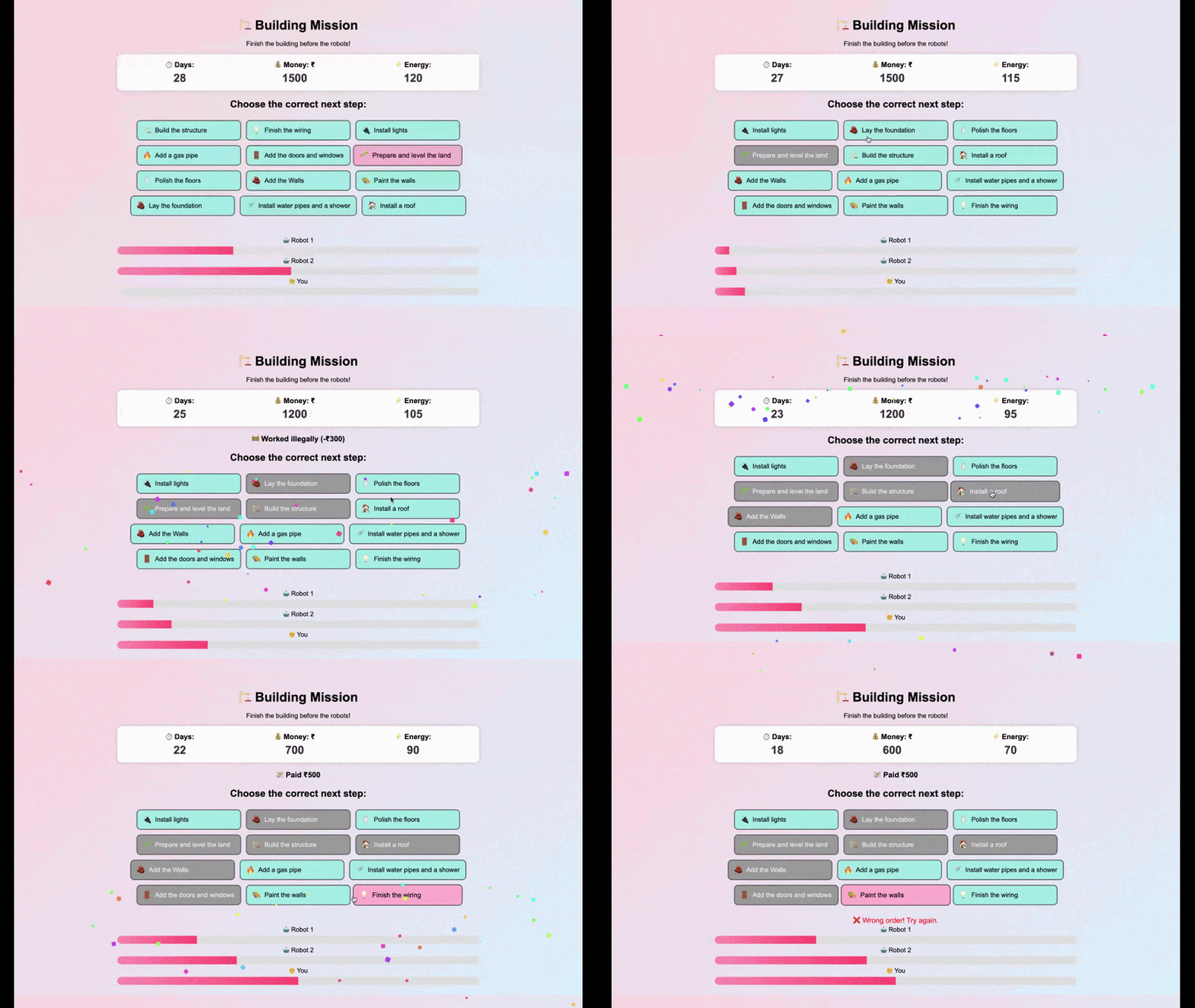


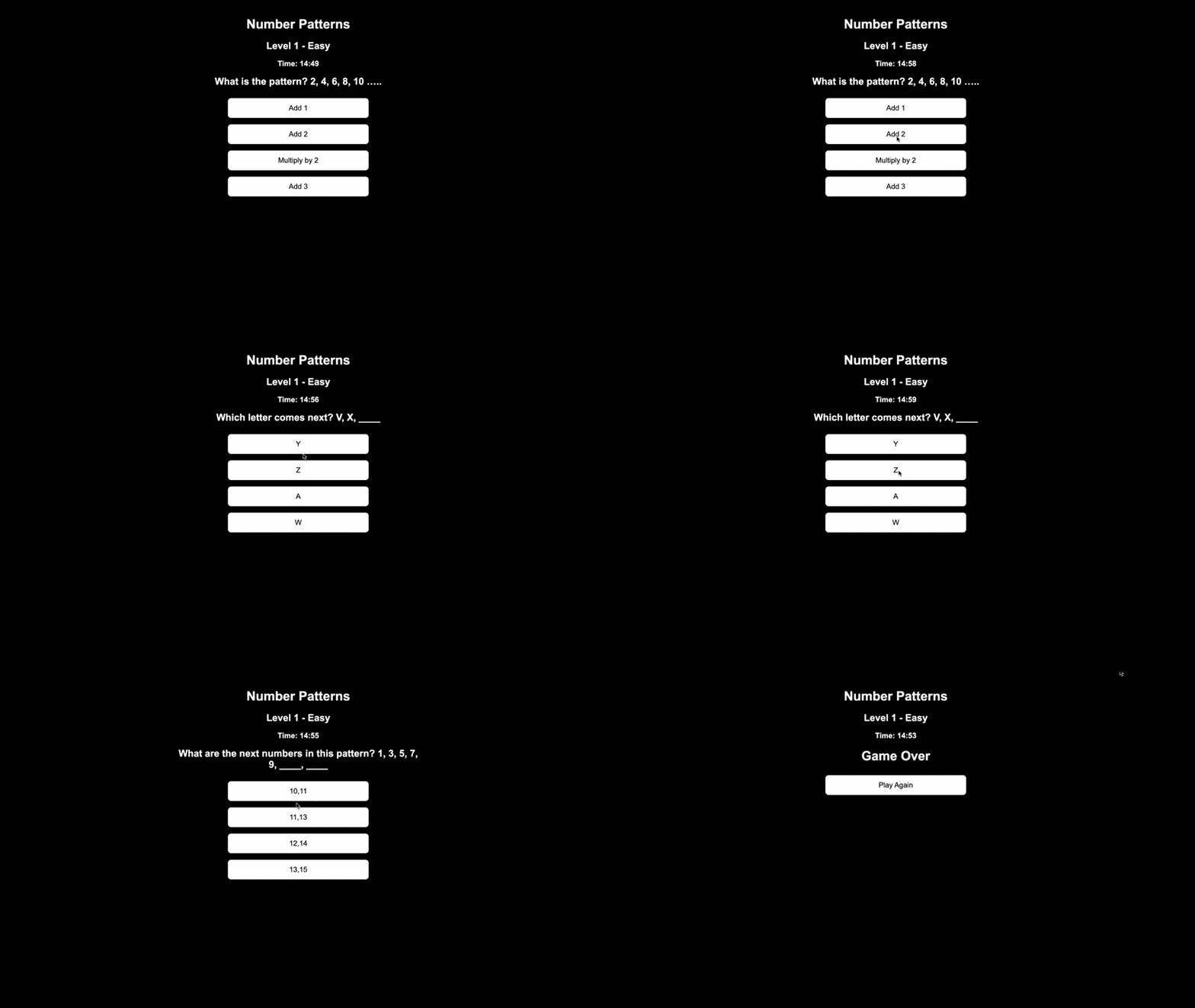
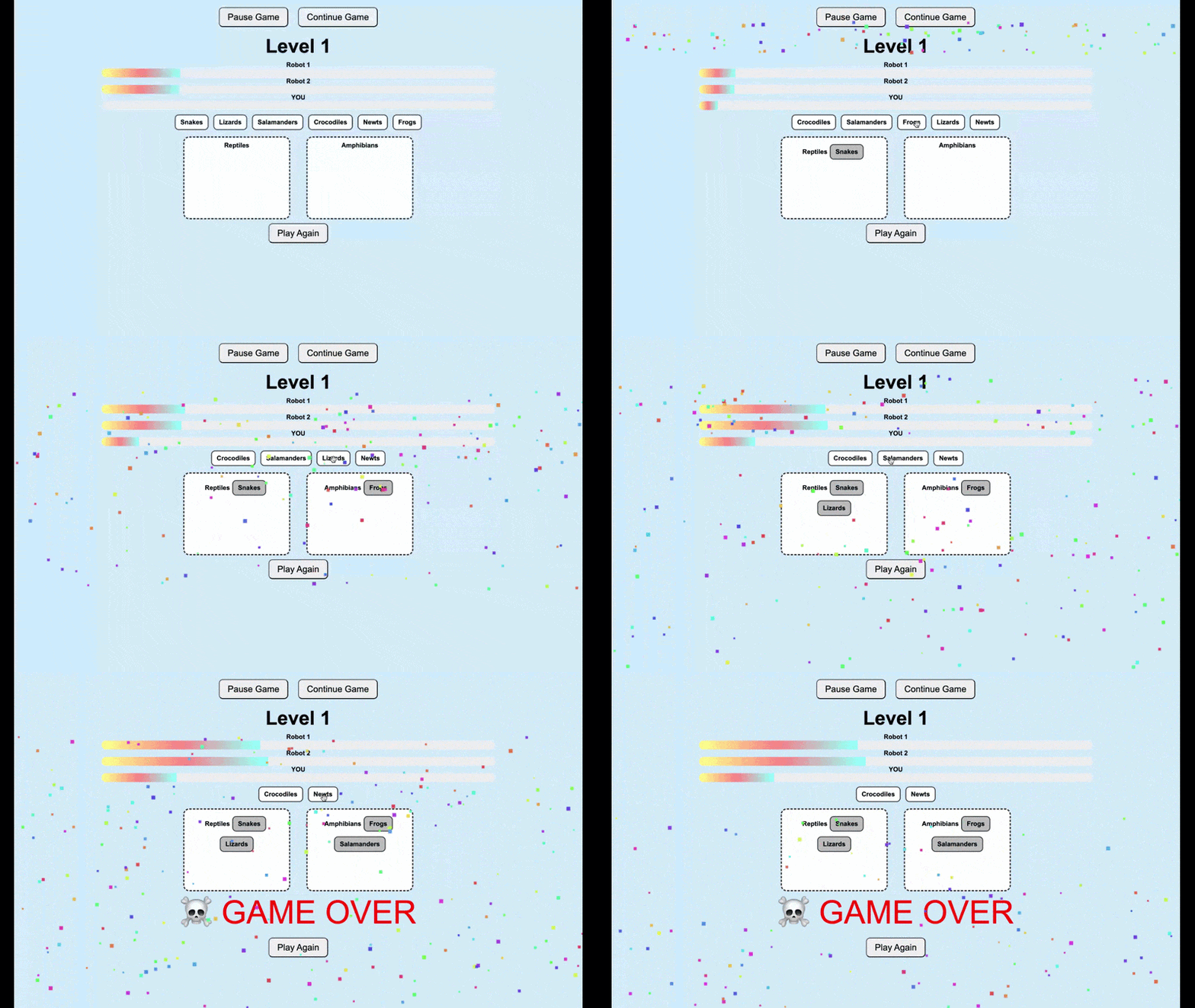
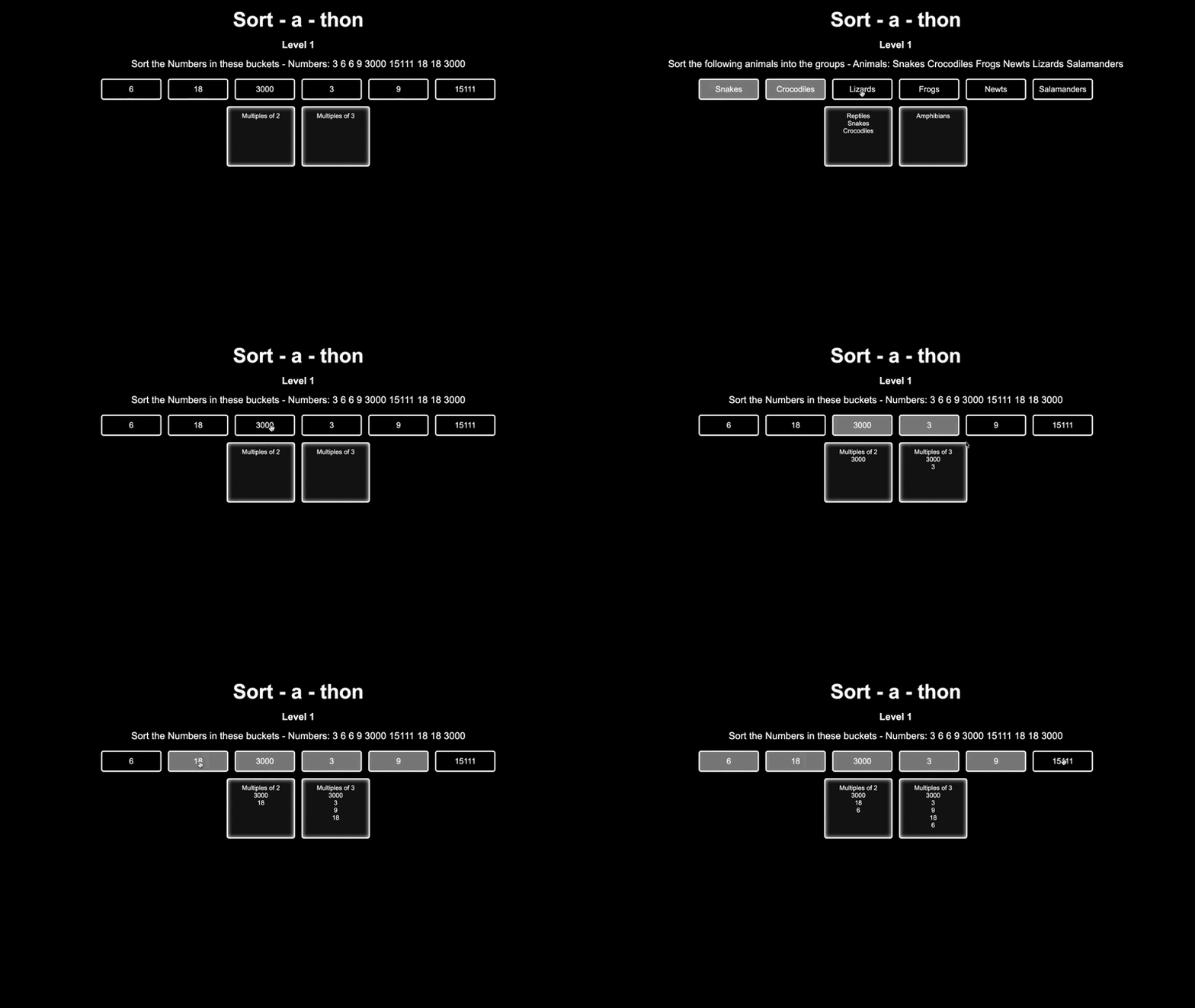
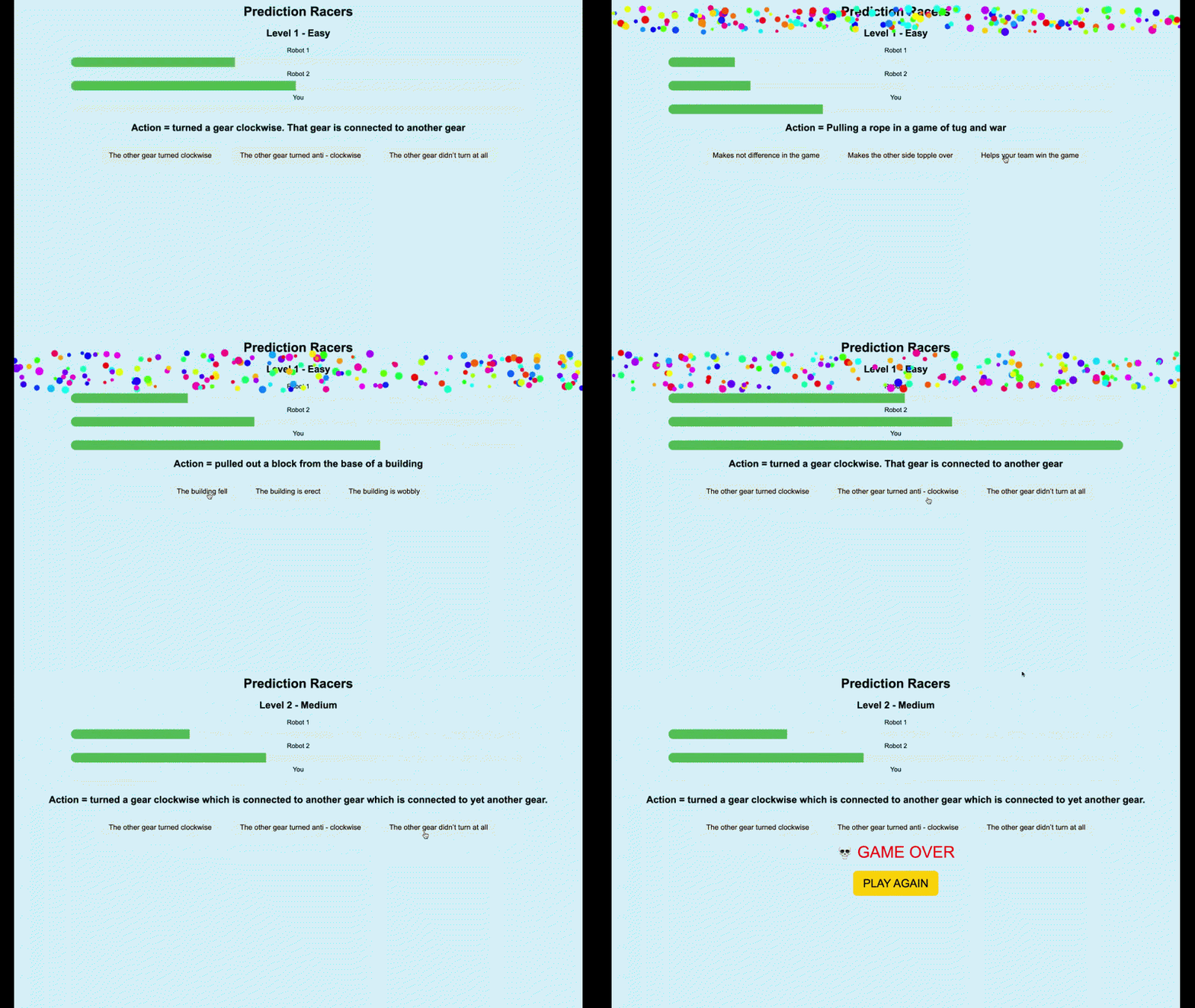
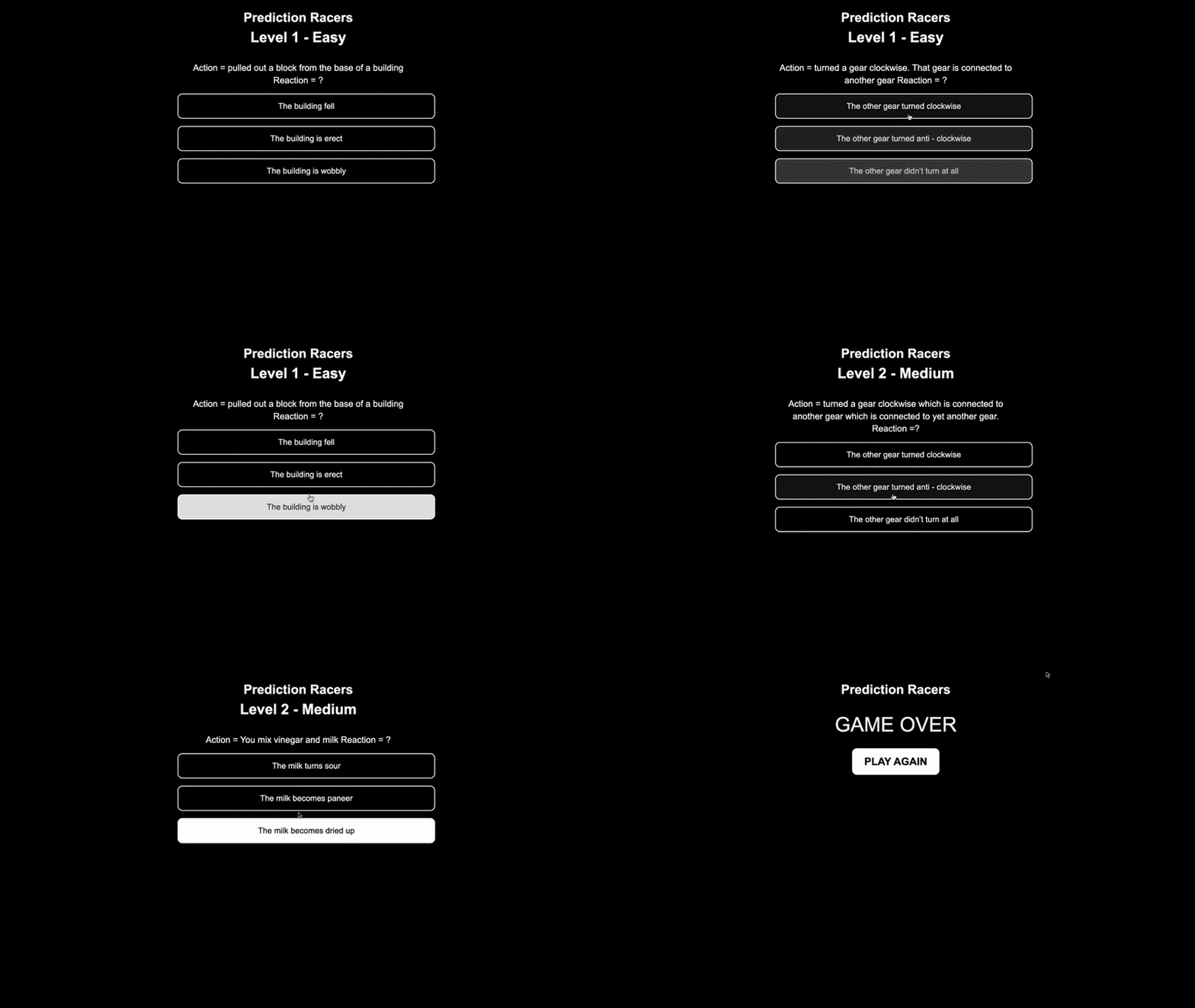
I sat with her the whole time. I explained it the same way I’d explained the design doc rule on day one: this is a test. Not of the AI’s ability to make something look impressive. Of your ability to think clearly enough that the logic holds without anything decorating it.
She rebuilt all four games under the constraint.
And something happened that she hadn’t expected. They all looked consistent. They looked like they belonged together. The thinking became visible in a way it hadn’t been before — because there was nothing else to look at. The architecture of each game, the logic of its conditions and sequences and variables, was no longer competing for attention with the visual layer on top of it.
Then she went back to the conditions game she’d been stuck on for four days — the midnight quest with the witch and the flying ghost and the consequence chains that made sense in her head but not in the game — and tried once more to fix it.
She couldn’t. The constraint made it clear that the problem was not in the visual layer. It was in the logic. And the logic could not be rescued by working harder. The foundation was wrong.
I asked her to let it go and start something new.
She built Baby Town. Black and white. Clean logic. Every condition grounded in reasoning the player could actually access. A game designed from the inside out rather than the outside in.
It was the clearest thinking she’d produced in the series.
What I actually want her to learn about AI
Not to avoid it. Not to be suspicious of it. Not to treat it as a threat to her own capability.
I want her to understand that AI is a capable implementer that needs clear thinking to work well. The clearer the brief, the better the output. The shallower the thinking, the more the AI fills the gap with its own choices — and those choices will look impressive whether or not they serve the design.
I want her to feel the difference between output she directed and output the AI invented. To know, in her own work, which is which. To be honest with herself about the gap between what she designed and what appeared.
And I want her to understand that the time AI saves on execution is not time to stop thinking. It is time to think harder. To go deeper into the logic. To ask better questions. To push the design further than she could have if she were also doing the implementation.
The constraint will stay. The logic will have to hold on its own before anything is added on top of it.
When the thinking earns the colour, the colour will come back.
New here? Start with the series introduction. Parent’s Guide: Computational Thinking for Pre-Teens