 Made in Humane Club



How I Built a System to Run My Home (Part 2: Childcare & Hiring Help)

When my second child, Vasuda, was born, I wasn’t worried about finding help.
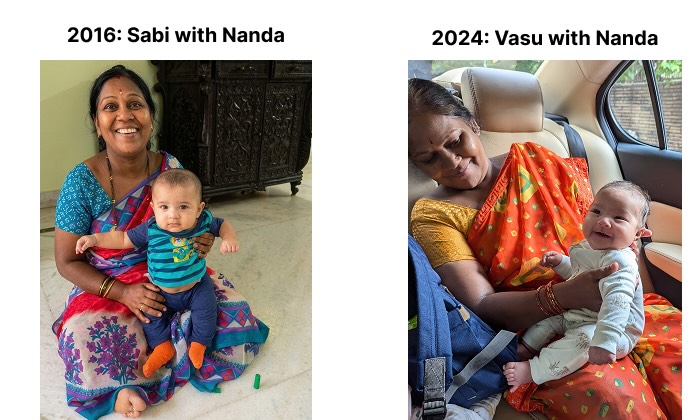
Nanda had been with our family for over 40 years. She had started working with us in Mumbai when she was twenty, raising my husband and his sisters from when they were little. She had brought her own two sons to work when they were small. She had sat with my mother-in-law through cancer, through treatment, through the hardest years. She had seen the family at its best and its worst and had never once considered leaving.
When Sabi was born, she raised her through her first 1.5 years. She wasn’t help. She was family — the kind you don’t find, the kind that simply becomes part of who you are. There were no trust issues, no cameras, no second-guessing. I had left Sabi with her for 8 to 9 hours at a stretch without a flicker of doubt.
When her own family circumstances meant she had to move to Pune, we kept in touch: through phone calls, during Covid, at her son’s wedding. We met her when we visited Pune.
When she offered to come to Delhi and stay until Vasuda turned 1.5, I didn’t think twice.
Then life happened…
When Vasuda was just five months old, Nanda had a medical emergency back home and had to leave overnight. There was no transition, no handover or backup plan. Just absence.
At the same time, we had just bought a house in Delhi and were renovating it from scratch. It was a massive, all-consuming project. Managing an infant, an older child, a home under construction, inconsistent help, and work. It stretched every limit.
My world stalled. Work paused. I was suddenly alone with a baby and a life I wasn’t prepared to manage without Nanda.
For the next nine months, I raised Vasuda on my own. I tried hiring help many times but none worked.
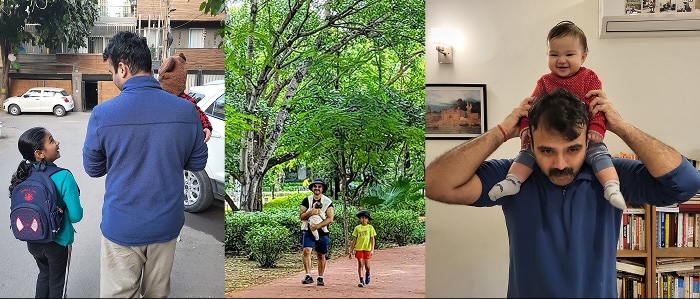
My husband carried more than people assume. He took charge of Sabi, her school, her routines, her emotional needs during a disruptive move to a new house. He was on the ground every day managing the renovation: contractors, follow-ups, decisions that needed someone physically there. And he played with Vasu often. All of this while working full-time. The gap he couldn’t fill wasn’t about effort or presence. Vasu, like many babies, had made her preference clear from the start. She wanted only me for feeds, sleep and comfort. Biology doesn’t negotiate.

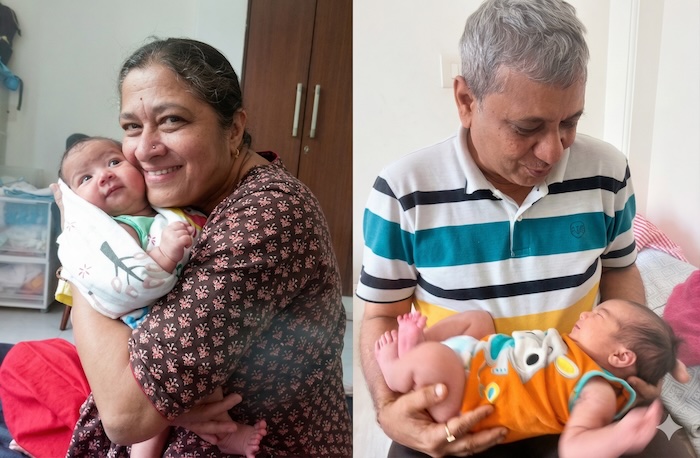
My parents came and stayed for stretches. Their presence was a lifeline. But it was not sustainable, and I never wanted it to be. They had done their time. They had raised children, managed homes, showed up for decades. What I want for them now is to be grandparents, to play and spoil and hand the baby back when she cries. Turning them into full-time caretakers felt wrong. Parents are for the good days. I wanted to protect that.
And then there was Sabi. Nine years old and steadier than most adults I know. We moved houses during this period, her world turned upside down, and she just got on with it. She stepped up in ways I didn’t ask for or imagine. Siblings play together — always have, always will. But in this season, Sabi played more than most. She kept Vasu company and engaged her for hours. Not because she had to. Because that’s who she is. I just want her to know I saw it.
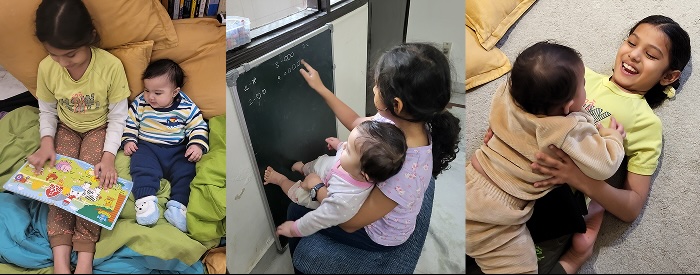
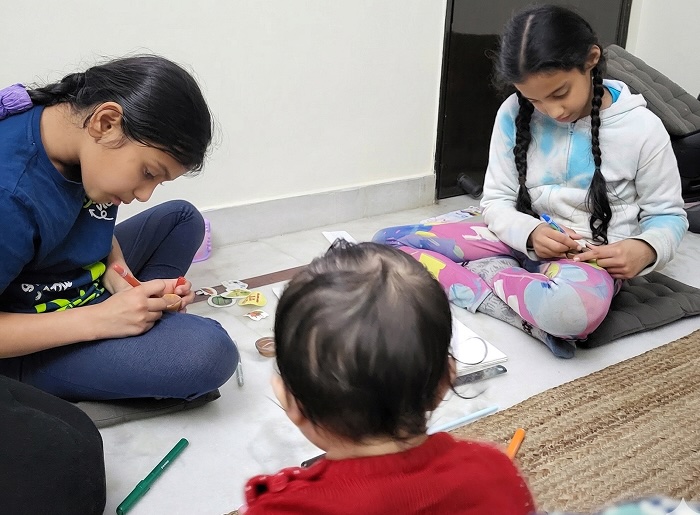
So when I say I raised Vasuda alone for nine months, I mean the primary caregiving, the feeds, the mental load, the hundred decisions a day that come with an infant. The village was there. But the village had limits. And the gap in the middle was mine to fill.
Nine months of trying. Four women who didn’t stay. And somewhere in the middle of all of it, a slow, uncomfortable realisation that I had no idea how to do this.
This is one of the journal entry from that period. Raw. Unedited. I’m sharing it because I think you’ll recognise something in it.
When Even the Help Says No
24th March 2025
This morning, I woke up feeling like I hadn’t slept at all. My eyes stung, my body ached, and before I could even stretch, Sabi walked in, cradling her elbow. “I think I slept on my hand,” she said, wincing. I pulled her close, offered some comfort, and mentally added “take doctor’s appointment” to today’s list.
A new maid was starting, our fourth in recent months. Madhu. I opened the door, still bleary-eyed. She stepped in, looked around the house, and the first thing she said was, “Oh… your house looks too scattered.” I blinked. Scattered? I wanted to laugh. How does that matter when there’s a toddler to chase and a thousand fires to put out?
She then asked if we had slippers for her to wear indoors. “If we don’t wear them ourselves, we don’t keep them for others,” I replied, trying to sound polite but firm. She didn’t smile.
Later, I saw her leave Vasu alone on the balcony while she came inside complaining about the heat. I rushed out, picked up my squirmy baby, and gently reminded her not to leave her unsupervised. Then came the egg incident. She looked at half a boiled egg in confusion and asked if we had a machine to cut it. A machine… for half an egg.
It quickly became clear: she didn’t like kids, and kids didn’t like her. Vasu avoided her completely, perhaps spooked by her white hair and raspy voice.
At 11:30, the power went out. With it, the water stopped too. Someone had left the bathroom tap open, and soon I was ankle-deep in water. The maid couldn’t use the washroom, and honestly, I couldn’t use the help. Before I could even bring myself to tell her it wasn’t working out, she called in the evening to say she wouldn’t be continuing. Distance, she said. Though she lives closer than anyone else we’ve tried.
I stood in the kitchen, mop in hand, and laughed. Not because it was funny, but because, well, how else do you process getting rejected? Each one had come, taken one look at what my life looked like from the outside, and decided the inside wasn’t worth figuring out.
This wasn’t the first time. There was Meera (highly recommended) but her hygiene was so poor that Vasu fell seriously ill after a few days. Then there was Sheela, the one I had hopes for. But she came with an endless stream of personal crises, a sick daughter, then typhoid, then silence. I chased her until I couldn’t anymore.
Saraswati, who had already decided this wasn’t where she wanted to be. She was between situations, looking for something more permanent. This wasn’t it.
And then, Madhu. The one who walked in and decided in five minutes that my house, my life, my status wasn’t worth her time.
Each of them had their own reasons. Their own pressures, their own lives pulling them somewhere else. I didn’t always know what those were. I only knew my side of it, and my side was exhausting.
I’ve realized something. In Delhi, even the domestic help has standards, not just for pay or workload, but for how you live, what you wear, how “put together” you seem. It’s not just employers judging maids anymore. The gaze goes both ways. And for someone like me, whose house is currently a construction zone and whose life feels the same, that gaze burns.
By afternoon, I was dealing with contractors. One of the baskets didn’t fit the kitchen cabinet. The carpenter blamed my drawing. I had verbally mentioned to leave 5mm and he forgot. A tiny detail, but one that caused chaos. Another lesson: communication clarity matters. Always document exactly what you mean, whether with carpenters or caretakers.
I was also coordinating a cab for a family trip, chasing a client proposal and trying to schedule an eye check-up for Sabi. The doctor rescheduled from 7:30 to 7:40 to 8 pm, then ghosted us entirely. We waited, called, waited again. Nothing.
And Vasu? Cranky all day. Maybe she sensed my unraveling.
But amidst the mess, there were glimmers.
Some old clients reached out again with website work I didn’t expect to come back. Then an old colleague messaged, now a team lead at Twitter AI, married and settled in Canada. “What are you up to?” he asked. I told him: design work, figuring out how AI changes what I do, building slowly and deliberately. He replied, “Everyone’s doing that these days.” Maybe. But not everyone is doing it while renovating a house, raising an infant, hiring their fourth maid in three months and getting ghosted by both doctors and domestic help.
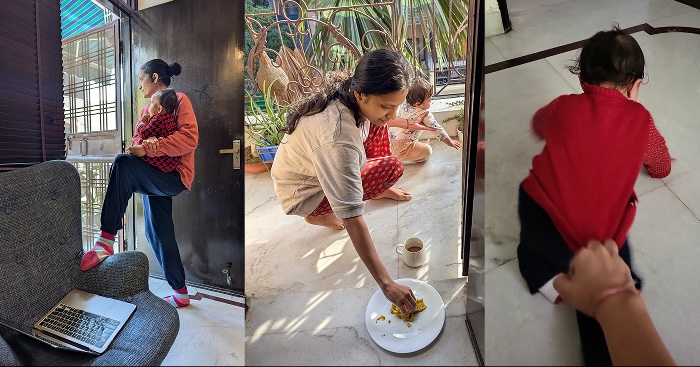
But I’m still here.
Maybe that’s what this is really about, not maids or milestones. The women who carry it all. And I mean all of us — me, yes, but also Meera and Sheela and Saraswati and Madhu, who showed up to someone else’s home, someone else’s chaos, someone else’s baby, trying to make it work under their own impossible circumstances. We were all exhausted. We were all doing our best. The difference is I got to write about it.
Today, I felt invisible. But maybe by writing this down, I make myself seen again.

That entry was March 2025. I kept writing entries like this for months. What I didn’t know then, what I only saw looking back, was that each failure was teaching me something specific. I just hadn’t organised it into anything useful yet.
What I Learned: Hiring Help From First Principles
The real challenge wasn’t availability. It was trust.
How do you replace someone who raised your child like her own? Someone who never needed monitoring, instructions, or validation?
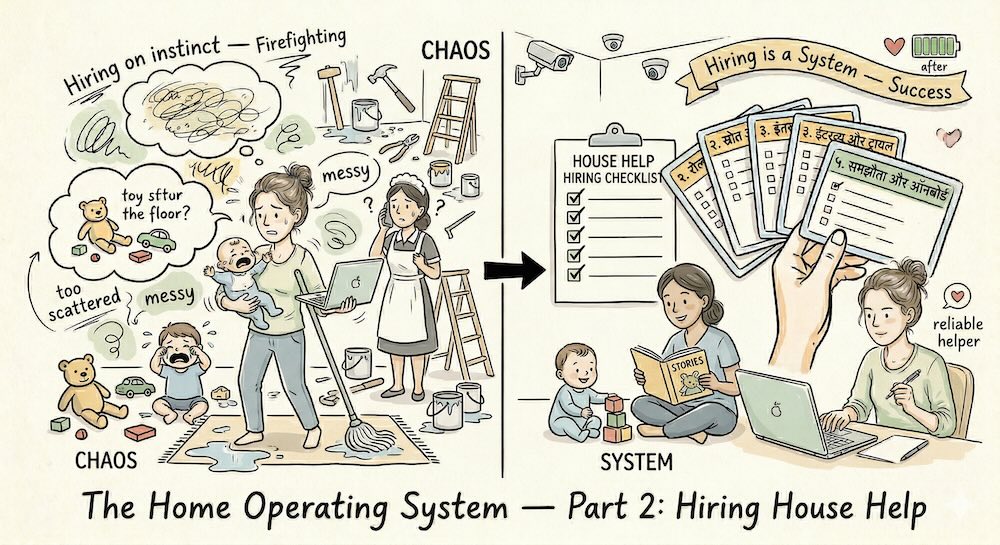
Out of that chaos came clarity. Hiring help is not informal. It’s a system. And systems need structure. But getting there first required me to break a few assumptions I didn’t even know I was carrying.
The gaze goes both ways.
I used to think I was the one doing the evaluating.
Madhu walked into a house mid-renovation, looked around for thirty seconds, and made her decision. In Delhi, candidates are assessing you too: your home, your composure, your apparent status, how sorted your life looks. For someone like me, whose house was a construction zone and whose life felt exactly the same, that gaze burns.
It was clarifying though. It meant I needed to show up to hiring with intention and a process, not desperate, not reactive, not half-hoping this one would just work out on its own.
What I’ve come to understand, looking back, is that this gaze runs deeper than status. Domestic work in Delhi is its own precarious economy. These women were also navigating uncertainty, difficult employers, unstable incomes, and families of their own depending on them. They were assessing me, yes. But they were also assessing whether this job was worth the risk. The power in the room was never only mine to hold.
The broken mental model: I was looking for Nanda 2.0.
For months I kept unconsciously filtering every candidate against an impossible benchmark. Nanda wasn’t a hire. She was the result of 40 years of proximity, loyalty, and love, compounded slowly, without any system. You don’t recruit for that. You can’t interview for it. No wonder everyone failed.
I stopped looking for trust and started building structure. Because trust with someone new, in a short window, doesn’t come from instinct. It comes from systems. And looking for Nanda 2.0 wasn’t a hiring problem. It was a grief problem I hadn’t named yet.
Stability is what you’re actually hiring for, not skills.
Every hire that failed, failed because of instability.
Meera had hygiene issues that made Vasu sick. Sheela had a cascade of personal crises. Saraswati was looking for short term work. Madhu had no interest in staying.
None of this showed up in “can she handle a baby.” It showed up in who she was outside the job: her family situation, her financial pressures, her reasons for being here, her proximity to leaving. Each of those situations had a life behind it I didn’t fully see. Skills can be taught. Stability is either there or it isn’t. So I stopped interviewing for skills first and started interviewing for life.
The trial week is not optional.
I used to think paying someone for a week before committing felt transactional. But a week of observation turned out to be the only honest signal I had.
Interviews are performances. The first week is reality. You see how she handles the baby when she’s cranky. Whether she reaches for her phone. Whether she actually plays or just sits nearby. Whether she follows the routine or improvises. Whether she asks questions or makes assumptions. One week of observation tells you more than five interviews.
Some things don’t have a solution. Just an acceptance.
No system replaces what Nanda gave us.
That took me a long time to sit with. I kept thinking if I just found the right person, the right fit, the right match, it would feel the same. It didn’t. What a system gives you is something different: predictability, clarity, a foundation that doesn’t depend entirely on one person’s character. Nanda was irreplaceable. What I actually needed was a process that could work with anyone reasonable and protect my child when it didn’t.
That reframe changed everything.
Same mistakes. Different room.
When I look at the mistakes I made hiring maids, unclear scope, skipped reference checks, hoping things would resolve themselves, not defining non-negotiables until they were violated, I recognise all of them from work. I once held onto a team member three months longer than I should have, kept hoping the situation would improve. I hadn’t defined what “not working” looked like early enough to act on it.
Hiring is hiring. The principles don’t change with the context.
High-agency parenting and high-agency managing need the same thing: knowing your non-negotiables before you’re tempted to drop them. You need to build the system when you’re calm, not when you’re ankle-deep in water at 11:30am with a clingy, cranky baby.
Once I had a process, filtering got faster, decisions got cleaner, and failures stopped feeling like personal verdicts.
The Complete House Help Hiring Guide and Checklist
No one replaces trust built over decades. That took me the longest to accept. Everything else is an approximation. And approximation needs systems.
I built that system out of nine months of trial, error, and repeated failure. The questions I now ask before hiring. The checks I run. The rules I set before day one. The red flags I’ve learned not to ignore. It’s all in the guide below, free to download, yours to use.