 Made in Humane Club



How I Weaned My Toddler Off Breastfeeding: What Actually Worked (After 3 Attempts)
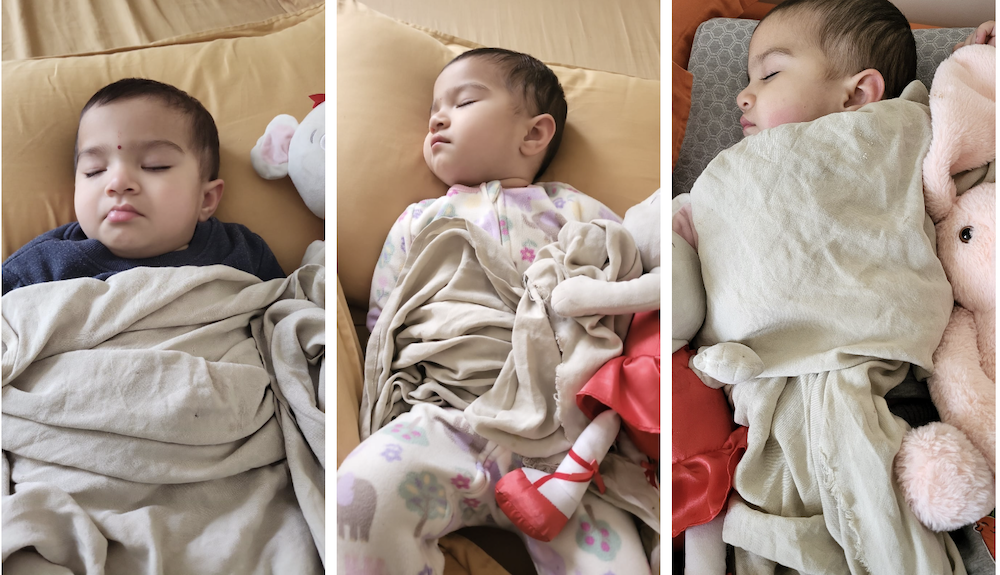

My toddler calls breast milk “mim mim.”
And for the longest time, mim mim wasn’t just milk. It was food, comfort, calm, sleep, reassurance. Everything.
If you’re trying to wean your toddler and wondering why it feels so much harder than blogs make it sound, let me say this clearly. It did not happen in a few days for me.
It took three attempts, a lot of emotional backtracking, and a very slow, intentional approach. This isn’t a checklist you execute. It’s an emotional journey. For the child and for the mother.
My Non-Negotiables
At the start, I was clear about one thing: I did not want to replace milk with something else that would become addictive and need weaning all over again (like a pacifier or bottle milk). I wanted her to actually learn how to settle without creating a new dependency.
My solution had to be “travel and space agnostic“. Something I could offer anywhere. That’s why I leaned on:
- Music (portable via Alexa or humming)
- Water (always available)
- A soft toy and her favorite blanket (easy to carry)
Why and When I Decided to Wean
This is probably the most common question. When is the right time to wean?
Doctors often suggest weaning at 12 months. But honestly, at 1 year, I couldn’t even imagine doing this.
We didn’t even start trying until:
- 15 months (Attempt #1: Failed)
- 18 months (Attempt #2: Failed)
- 20 months (Success!)
It wasn’t about a number; it was about my body being physically exhausted from being the only source of comfort day and night. More importantly, she was finally old enough to understand. Her growing vocabulary meant I could explain: “Mumma is here. Mim mim isn’t coming, but comfort still is.”
So for me, weaning only made sense when both of us were ready. Not just biologically, but emotionally and mentally too.
Attempt #1: Cutting Comfort Feeds (Failed)
My first attempt came from pure exhaustion and randomly trying. Dipping feet in water.
I tried cutting off milk when she came to me angry, bored, sad, frustrated. Basically whenever she was seeking comfort. Mim mim had become her emotional regulator.

But I was still giving her milk:
- During daytime naps
- At night
So nothing really changed.
After this failed attempt, we were back to giving her milk whenever she asked.
Why it failed
I removed comfort sometimes, not consistently. That inconsistency confused her and frustrated me.
What I learnt
This wasn’t about timing. It was about mental bandwidth. I needed enough emotional and mental space to actually help her through this transition, not just decide that it should happen.
Attempt #2: The Band-Aid Phase (Failed)
This time, I tried daytime weaning but continued night feeds.
I also used a band-aid and told her, “Mumma is hurt, I can’t give mim mim.”
Her first reaction still stays with me.
She immediately thought, Oh, mumma is hurt. She didn’t insist on mim mim. She genuinely didn’t want it.
But she also didn’t know what would calm her down instead.
A “no” with conditions doesn’t make sense to a toddler. If Mumma is “hurt” in the day, why is she okay at night?
I did try one night without milk, but it was too much for both of us. We were traveling around that time, routines were broken, and transitions didn’t stick.
During travel, especially flights, I had to give her milk.
The same happened when:
- We were visiting guests
- Time was tight
- I didn’t have the luxury to sit with her for hours and help her fall asleep
Very quickly, we were back to square one again.
On top of that daytime naps would take 2 to 3 hours just to make her fall asleep. Thanks to work from home, I could somehow squeeze in that time
Why it failed
- Mixed signals (no mim mim in the day, yes at night)
- Travel and external disruptions
- Emotional readiness, hers and mine, wasn’t there
- I couldn’t hold boundaries consistently
What I learnt
- Half-measures affect your body, too. I developed mastitis because my body didn’t know whether to stop or start. I had experienced mastitis with my first child and was afraid of it progressing again. Because I recognized the symptoms early, I went to the doctor immediately. Thankfully, I recovered in 2 to 3 days after a course of antibiotics.
- Keep emptying the milk. On the first day alone, I expressed almost two bowls of milk.
- Weaning is a physical transition for the mother as much as an emotional one for the child.

Attempt #3: The One That Finally Worked
By the third attempt, I stopped trying to remove milk and started building a system that made it unnecessary.
Once we were back from travel and fully settled, I started again. Very intentionally, during the day and at night. I started on 16th January 2026
By this time, she understood what this meant. She cried. Threw tantrums. But it wasn’t unmanageable.
During this phase, I realized how important it was for me to stay calm, even when it felt impossible. This was a big change for her. Losing patience or getting angry only sent confusing signals and increased her anxiety.
Around the same time, Vasu became anxious that mumma might leave. She would cling to me the entire day and wouldn’t let me out of her sight even for a second. It was her way of seeking reassurance. The milk was going away, so she needed to know that I wasn’t.
Staying consistent and calm helped her understand that even though mim mim was ending, my presence wasn’t.
What I Finally Understood (This Time It All Worked Together)
Before even thinking about night weaning this time, I understood something clearly. If she wasn’t eating and playing well during the day, she needed mim mim at night.
So I focused on everything together:
- Making sure she ate all 3 meals properly
- A heavy dinner
- Milk before bedtime (not as a sleep association)
- Tiring her out with park time, outdoor play and bathing
This alone reduced night wake-ups drastically.
And it’s important to say this honestly: Even when she was drinking mim mim, she would wake up at least 4–5 times every night.
Night dependency almost always starts during the day. Once the day got fixed, nights followed.
Neem Oil
This time, my mom suggested applying neem oil.
I was very careful.
- I made sure it was organic and edible
- That it wouldn’t cause any harm even if she ingested it
- Many neem products are actually insecticides used for plants, so please watch out
I bought mine from a local Ayurvedic shop in Mumbai.
The bitter taste and the awful smell were the “final signal.” She realized, “This has gone bad now.”
Again, she didn’t want mim mim. But she didn’t know how to settle down or fall asleep without it.
Creating New Comfort (Without Creating New Dependencies)
This part took time. Mim mim wasn’t just removed. It had to be replaced with multiple layers of comfort, very intentionally.
1. Music
I started playing lullabies on Alexa. I was very clear that I didn’t want to use my mobile phone:
- Ads can suddenly play
- Someone can call or message
- Notifications break the calm
- It becomes a visual distraction
Alexa being voice-based helped a lot. I could give commands without touching the device, which reduced interruptions. Music stayed in the background — exactly where I wanted it.
Music became a constant, but not something she watched or fixated on.
2. Movement
Movement also had to be very specific. I tried multiple patterns:
- Walking straight and fast
- Jumping up and down
- Infinity loops
None of these worked consistently.
What finally worked was slow swaying while walking left and right alternately.
Gujjus who play garba will know this: it’s like the popat step, but a much slower version 😀
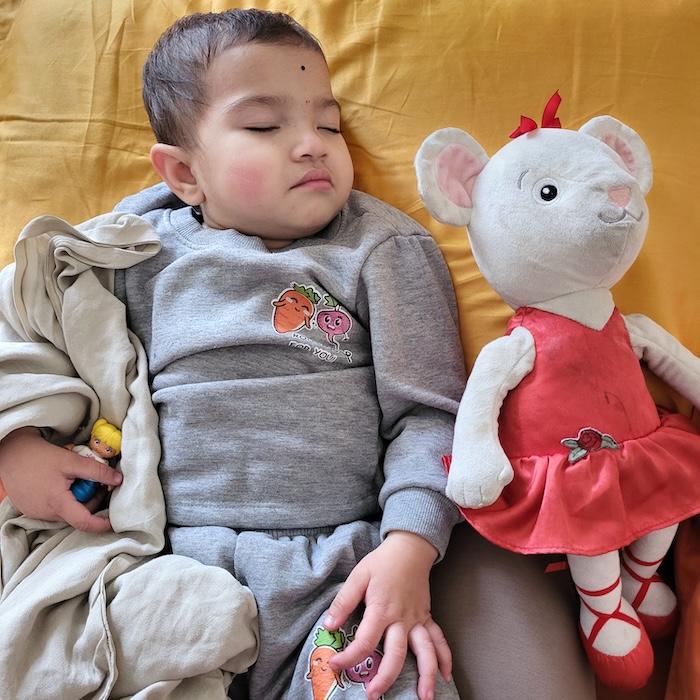
3. Soft Toy
Around this time, she also started sleeping with a soft toy. It became a quiet source of comfort.
We were intentional here: Only one soft toy allowed. She chose it herself and calls her “baby”
4. Water
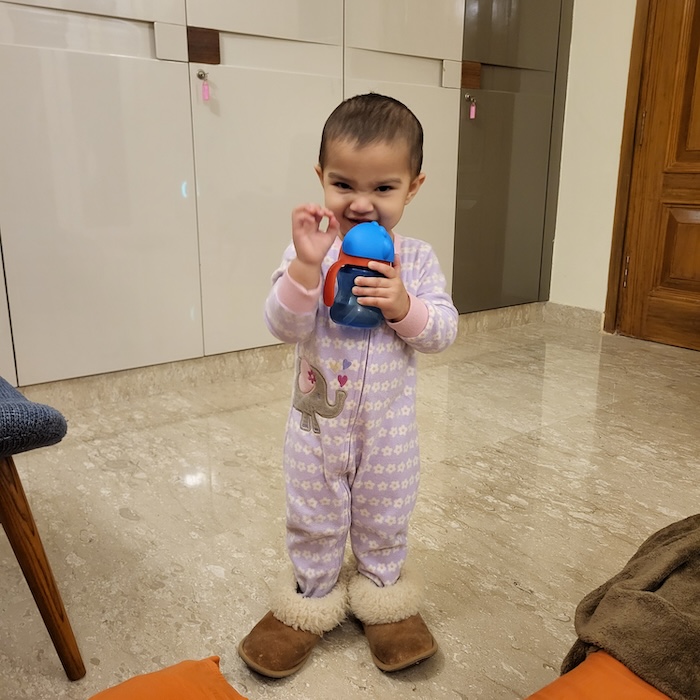
I also started offering water before sleeping or whenever she woke up at night. Initially, she rejected it. But after repeatedly offering it calmly, she accepted it.
Water helped in two ways:
- It addressed genuine thirst
- It replaced the act of feeding without recreating the dependency
5. Environment Control
Environmental noise was a bigger trigger than I realized. I ensured:
- No loud sounds while cooking or cleaning
- No sudden noises
- Maids were trained to be contextually aware when Vasu was asleep
- Everyone followed the same sleep protocol
Consistency outside the bedroom mattered as much as what I was doing inside it.
6. The Hardest Part: Middle-of-the-Sleep Wake-Ups
The first few days were hardest here. Earlier, whenever she woke up mid-sleep, mim mim would immediately settle her.
Now, when she woke up: She was half asleep, in a really bad mood and crying hard. At that moment, lullaby and swaying didn’t always help immediately.
But over the next few days, once she internally accepted that mim mim wasn’t coming back, she stopped waking up in the middle of sleep altogether.
How the Nights Went
Day 1
- Woke up multiple times
- Offered water instead of milk. Initially she rejected it, but after repeatedly offering her, she accepted it
- Lots of crying
- Lots of holding and walking
Day 2
- Took 1.5 hours to fall asleep
- She was feeling hot and did not want any clothes on her body
- Big tantrum at 4:30 a.m. for nearly an hour
- Eventually slept again out of sheer tiredness

Day 3
- Skipped daytime nap
- Played a lot during the day in park
- Woke once at 4:30 a.m and fell asleep quickly with lullaby


By Day 4, she was okay.
It’s now been 10+ days, and she sleeps through the night.
The Routine That Works Now
Afternoon Nap
- Fixed between 1 p.m. – 3 p.m.
- Lullaby on Alexa
- Gentle walking or slow garba-style movement
- Asleep within 5 minutes
Night Sleep
- Rolls around on the bed
- Sips lots of water
- Lullaby in the background
- We play a fun game. Call out everyone she knows and say that person is asleep (nee nee):
- Dadda: Nee nee
- Dabi: Nee nee
- Meow: Nee nee
- Dogie: Nee nee
- Aunty: Nee nee
- etc.
What Changed After Weaning
The most surprising thing wasn’t just the end of nursing. It was how her entire world opened up once she wasn’t “tethered” to me. Once we crossed the 5-day mark, the “new normal” settled in. The changes were real and visible.
- A Healthy Appetite: Since she wasn’t filling up on “comfort milk,” she started genuinely enjoying her meals. She now eats three full meals plus snacks and she’s obsessed with curd!
- Predictable Days: Our routine finally has a rhythm. Naps are fixed, and she’s asleep within five minutes rather than an hour-long battle.
- The Sleep Breakthrough: For the first time, she is sleeping through the night. Even her “poop schedule” has stabilized!
- New Energy: She is more playful, more aware, and more participative. It feels like she’s no longer waiting for the next feed, so she’s finally free to just… be a toddler.
| Before Weaning | After Weaning |
|---|---|
| Waking 4–5 times a night | Sleeps through the night |
| Nap time took 1–2 hours | Asleep in 5 minutes |
| Grazing / Low interest in food | Eats 3 solid meals + snacks |
| “Mim mim” as emotional regulator | High energy, more aware and participative |
A note on nutrition: I give her bottle milk only if she asks. She never liked outside milk or formula, even as a baby. But she loves curd, and I’m completely okay with that.
What I Want Other Moms to Know
- If it doesn’t happen quickly, you’re not failing
- If you go back and forth, that’s normal
- If it takes multiple attempts, that’s okay
This isn’t about milk. It’s about comfort, attachment, and learning new ways to feel safe.
Weaning isn’t something you do to your child. It’s something you walk through together.
Go slow. Trust yourself. Give yourself grace.